Autism Spectrum Disorder is a developmental disability characterized by differences in the brain. It was first recognized in 1943, according to the U.S. Center for Disease Control and Prevention, and was added to the Diagnostic and Statistical Manual in 1980.
Autism can be difficult to diagnose, said Danai Fannin, Ph.D., associate professor in the department of communication sciences and disorders at North Carolina Central University (NCCU). Fannin became interested in the study of autism while conducting post-doctoral research at UCLA.
“There are a lot of symptoms that look like other things,” said Fannin.
For example, some autistic people may not pick up on social cues. They may engage in repetitive behavior such as hand flapping, verbal tics or restricted interests like only being interested in Disney princesses or the color orange.
Other symptoms could include delayed speech and language skills, delayed movement skills, lack of joint attention and unusual mood or emotional reactions.
“Some have intellectual disability,” Fanning said. “Others don’t.”
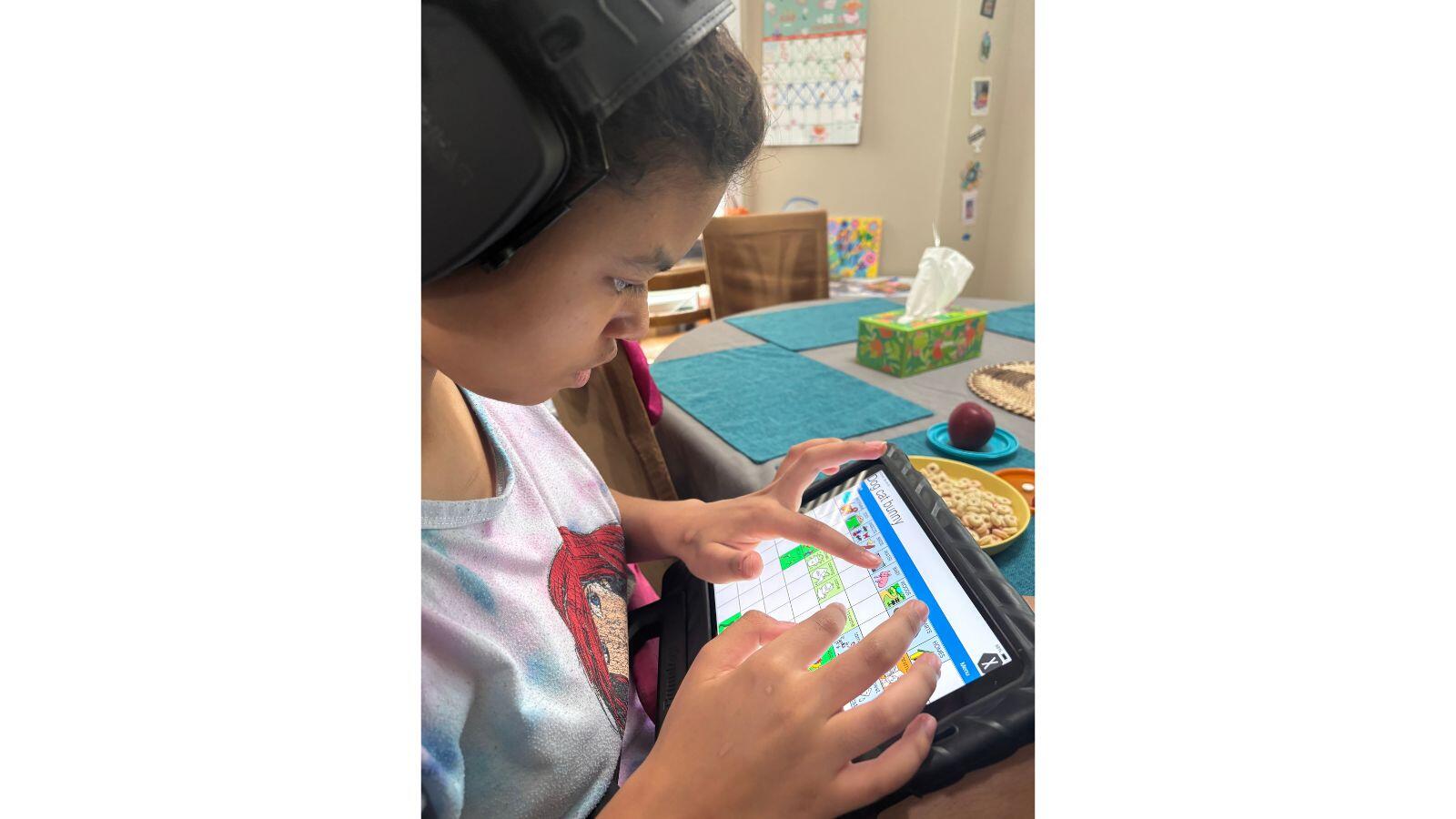
Some autistic people have sensory processing disorder, where sounds are too loud, lights are too bright or touch sensation might be heightened, i.e. a shirt tag or socks are irritating. To exemplify a sound sensitivity, the new autistic Barbie doll introduced by Mattel at the beginning of 2026 wears noise cancelling headphones.
It’s unclear what causes autism. The proportion of people for whom researchers can currently identify a specific genetic cause is only about 10% of cases, said Fannin.
“We are still researching environmental factors and the age of parents,” said Dannin. “Vaccines have been ruled out. It is not Tylenol. According to demographics from around the world, it seems to affect everyone.”
While autism can affect anyone, there can be disparities in diagnosing it, particularly for Black and Latinx people.
“The way we diagnose is based on behavior, which can be subjective across cultures,” Fannin said. “In some cultures, it is rude for children to make eye contact with adults. Girls with autism across all races are harder to identify.”
Researchers aim not to cure autism but to alleviate the disabling aspects. Occupational therapists can help autistic people with drinking, using a fork and feeding when there are sensory processing differences that make eating food challenging. Physical therapists can help with motor planning difficulties.
In the NCCU Department of Communication Science and Disorders, faculty and graduate students help establish or enhance communication by targeting speech and language skills.
AI and Autism
Artificial intelligence (AI) now plays a role in the identification of autism traits.
The SenseToKnow app (still in its clinical validation phase) is a screening tool created by researchers at Duke University which uses machine learning to detect autism traits in the preschool years.
Through a tablet or smartphone, AI analyzes the child’s eye gaze, facial expressions, head movements, blinking and motor skills. It can reliably detect autistic traits across children of different sexes, races and ethnicities.
The Modified Checklist for Autism in Toddlers (M-CHAT) is a common screener that asks parents a series of questions. For example: Do their children look when someone points, reach up to parents, gesture, have any words or make sounds?
Pediatricians then conduct follow-up interviews, but “this is time consuming and not always completed,” Fannin said. “So digital health tools like the SenseToKnow application might be an objective addition to the screening process.”
Augmentative and alternative communication (AAC) systems (ways to communicate besides speaking) are increasingly using AI. AI enables high-tech AAC systems to learn from a user's communication patterns, improving word prediction, message suggestions and personalized communication support over time.
Fannin’s biostatistician collaborators at Duke are also using AI to analyze electronic health records. One study of 65,000 children on Medicaid is looking at conditions that “co-occur” with autism and late talking.
“We can use AI to crunch huge data sets,” Fannin said.