The Family and Consumer Sciences M.S. program is no longer accepting students.
Family and Consumer Sciences, M.S.

Program Overview
Strengthen Your Understanding of Human Development
The Family and Consumer Sciences M.S. program includes a concentration in Human Development and Family Studies. This program is designed to prepare students to focus on the development of the individual across the human lifespan. With advanced instruction in human development and family studies, students gain knowledge of improving the lives of individuals, families, and communities through the study of a variety of topics, including human growth and development across the lifespan, principles of leadership and supervision, changing family structures, program evaluation techniques, and curriculum and program planning. This concentration offers a thesis and non-thesis (internship) option.
Graduates are equipped to promote well-being, implement research-informed practices, lead programs, influence policy, and support individuals and families in professional, academic, or community settings.
The Master of Science in Family and Consumer Sciences provides a strong academic foundation that prepares professionals for meaningful careers after graduation. Graduates will leverage research with real-world topics to empower graduates to lead in human services, education, policy, and community development.
Info Accordions
To apply to the Family and Consumer Sciences M.S. program, you will need:
- An online graduate admission application
- $50 non-refundable application fee
- A bachelor’s degree from an accredited institution
- A minimum GPA of 3.0 (conditional admission may be available)
- Two letters of recommendation
- Résumé/CV
- Official transcripts from all schools attended
- Transcripts are required from every institution you have attended, even if you completed only one course. All applicants undergo a National Student Clearinghouse review of their educational record, and an official transcript must be submitted for each school listed.
- If you earned your degree from a non-U.S. institution, please see the International Applicant Requirements below.
Advance Your Future at NCCU
Join a community of thinkers, leaders, and innovators at NCCU’s School of Graduate Studies. Build the skills and experience to lead in your profession and beyond.
International students are encouraged to apply to the Family and Consumer Sciences M.S. program. NCCU provides dedicated support throughout the admission process to ensure a smooth transition to academic life and study in the United States.
- Please review the following guidelines to ensure timely submission of all required materials. To apply to the Family and Consumer Sciences M.S. program, you will need:
- An online graduate admission application
- $50 non-refundable application fee
- A bachelor’s degree from an accredited institution
- A minimum GPA of 3.0 (conditional admission may be available)
- Two letters of recommendation
- Résumé/CV
- Official transcripts from all schools attended
- Transcripts are required from every institution you have attended, even if you completed only one course. All applicants undergo a National Student Clearinghouse review of their educational record, and an official transcript must be submitted for each school listed.
- If you earned your degree from a non-U.S. institution, please see the International Applicant Requirements below.
- Statement of purpose/personal statement
- Note: The GRE is not required
- English Language Proficiency: If English is not your country’s first language, you must submit one of the following:
- TOEFL: Minimum score of 70 (internet-based) or 550 (paper-based). You may take the TOEFL exam at the NCCU Testing Center by registering through the TOEFL Test Registration website and selecting North Carolina Central University as your testing location
- IELTS: Minimum overall score of 6.0
- Transcript Evaluation: Submit an official course-by-course transcript evaluation from one of these accredited agencies:
- Educational Credential Evaluators, Inc. (ECE)
- Global Credential Evaluators, Inc. (GCE)
- International Academic Credential Evaluators, Inc. (IACE)
- International Education Evaluations, Inc. (IEE)
- World Education Services (WES)
- Special Option: NCCU has partnered with SpanTran to offer a discounted course-by-course evaluation for graduate applicants ($170). Apply through SpanTran’s NCCU portal.
Financial Documentation
- Applicants must provide the following:
- Financial Statement Certificate of Eligibility (FSCOE) – choose the correct form:
- Graduate Studies (All Other Programs)
- Notarized bank statement showing the last six months of financial activity
- Copy of passport
- Any additional program specific requirements
Check your specific program’s webpage for any additional admission requirements beyond those listed above.
Admission Deadlines
U.S. Applicants:
- Fall: July 1
- Spring: December 1
International Applicants:
- Fall: April 1
- Spring: September 1
Program Format
- Degree: Master of Science in Family and Consumer Sciences
- Credits: 36 credit hours
- Format and Location: On-campus, Main Campus
- Time to Complete: Approximately 2 years full-time (varies part-time)
- Schedule: Evening classes Mon–Thurs, with some flexible online sessions
Professional Core (12 hours)
- FCSG 5200 - Research Techniques (3 hours, Summer)
- FCSG 5300 - Curriculum and Program Planning (3 hours, Spring)
- FCSG 5700 - Program Evaluation Techniques (3 hours, Fall)
- EDGR 5910 - Graduate-Level Statistics Course (e.g., EDGR 5910) (3 hours)
Concentration Courses (15 hours)
- FCSG 5150 - Principles of Leadership and Supervision (3 hours, Spring)
- FCSG 5400 - Child and Family Studies (3 hours, Spring)
- FCSG 5430 - Human Growth and Development (3 hours, Spring)
- FCSG 5500 - Div. and Transition in Family Structures (3 hours, Fall)
- FCSG 5820 - Adult Years and Aging (3 hours, Fall)
Cognate/Electives (6 hours)
- Cognate/Electives - Students are to take 6 hours of graduate-level elective courses.
Thesis Option (3 hours)
- FCSG 5900 - Thesis (3 hours, Fall and Spring)
Non-Thesis Option/Internship (3 hours)
- FCSG 5850 - Special Problems: Internship (3 hours; requires 420 contact hours, Fall and Spring)
Culminating Experience: Internship or Thesis
As part of the Master of Science in Family and Consumer Sciences program, students complete a culminating experience through either an internship or a thesis. Both options are designed to connect academic learning with professional practice or research-based application.
Internship Option
Students participate in a supervised professional internship aligned with their career goals, gaining hands-on experience and industry insight, typically in their final semester. At the end of the internship, students submit a comprehensive report with a reflective summary, presentation, and portfolio, supported by supervisor evaluations.
Thesis Option
Students may choose a research-based thesis guided by a faculty advisor, ideal for those interested in academic research or future doctoral studies. The thesis must demonstrate original research and critical analysis, culminating in a formal defense and presentation before a faculty committee.
Placement and Faculty Support
Internship placements are coordinated with faculty advisors to align with each student’s professional goals and academic focus. Thesis students receive individualized mentoring from faculty throughout the research and writing process.

Getting admitted is just the start of something bigger. The Family and Consumer Sciences program helps you chart your path forward with the tools, mentorship, and confidence to achieve your goals.

The Master of Science in Family and Consumer Sciences at North Carolina Central University equips graduates with the knowledge, leadership, and practical skills to strengthen families, empower communities, and support human development across diverse settings.
Through applied research and experiential learning, students prepare for meaningful careers in education, human services, nonprofit organizations, community programs, and government agencies.
Graduates pursue roles such as:
- Family and community engagement specialists
- Educators and early childhood or youth program directors
- Family life and parent educators
- Child and family development or early intervention specialists
- Cooperative Extension and education outreach professionals
- Child life and family support professionals
- Adoption, child welfare, and family services managers
- Professional development and training coordinators
- Human services, case management, and substance abuse program specialists
- Nonprofit and agency directors
- Policy advocates and researchers focused on family and community well-being
Investing in your graduate education at NCCU is both affordable and supported by a variety of funding options designed to help you succeed.
North Carolina Central University (NCCU) stands among the top and most affordable graduate schools in North Carolina—offering high-quality, accredited programs that deliver exceptional value and return on investment.
Graduate – In-State (Per Semester)
| Credit Hours | (Tuition Only) | Subtotal (All Fees) |
|---|---|---|
| 1 | $264 | $903 (Part Time) |
| 3 | $790 | $1,430 (Part Time) |
| 6 | $1,580 | $3,892 (Full Time) |
| 9 | $2,370 | $5,233 (Full Time) |
| 12 | $2,370 | $5,233 (Full Time) |
Graduate – Out-of-State (Per Semester)
| Credit Hours | (Tuition Only) | Subtotal (All Fees) |
|---|---|---|
| 1 | $1,003 | $1,643 (Part Time) |
| 3 | $3,008 | $3,648 (Part Time) |
| 6 | $6,016 | $8,328 (Full Time) |
| 9 | $9,024 | $11,887 (Full Time) |
| 12 | $9,024 | $11,887 (Full Time) |
Note: The rates above are based on the 2025–2026 Estimated Tuition and Fee Schedule. Tuition and fees are subject to change each academic year.
These estimates do not represent a final determination, or actual award, of financial assistance or a final net price; they are only estimates based on cost of attendance and financial aid provided to students in 2025–2026. Cost of attendance and financial aid availability change year to year. These estimates shall not be binding on the Secretary of Education, North Carolina Central University, or the State of North Carolina.
For the most up-to-date information, please visit the NCCU Applying For Aid page or access our Estimated Tuition and Fee Schedule.
Estimated Tuition and Fee Schedule
Navigating graduate school costs can feel overwhelming — but you don’t have to do it alone. At North Carolina Central University, we’re committed to helping you fund your graduate education through scholarships, assistantships, fellowships, and financial aid. Explore your options and take the next step toward achieving your academic and professional goals.
Why Choose This Program?
 The Family and Consumer Sciences M.S. program takes a comprehensive, interdisciplinary approach to understanding and enhancing the well-being of individuals and families across the lifespan. Students build a strong academic foundation rooted in research and theory while developing practical skills to address real-world challenges. With flexible thesis and non-thesis options, the program empowers students to tailor their studies to align with their career goals and research interests.
Info Accordions
The Master of Science in Family and Consumer Sciences at North Carolina Central University offers more than a degree: it delivers a holistic, career-ready experience rooted in rigorous research, real-world practice, and meaningful relationships. Whether your goal is to support families, lead in education or human services, or drive community development and policy change, this program is designed to equip you for purposeful impact.
What sets us apart:
- Deep disciplinary grounding. You will engage with the physical, cognitive, emotional, and social development of individuals across the lifespan (PLO 1).
- Applied knowledge for diverse settings. Our coursework prepares you to assess and address the needs of individuals and families in community organizations, healthcare, education, and beyond (PLO 2).
- Research that matters. You will conduct and evaluate original research that advances the field of human development and family studies (PLO 3).
- Leadership in action. We emphasize communication, collaboration, and leadership skills so you can work effectively with individuals, families, and communities to promote positive outcomes (PLO 4).
- Experiential learning. With internships and thesis options, you will translate theory into practice and develop professional competence in real-world environments.
- Dedicated faculty and community. At the heart of this program are faculty who care deeply about your growth, academically and personally, and an inclusive community that fosters belonging and success.
- Career-forward outcomes. Graduates leave prepared to lead in human services, education, policy, and community development with the skills, confidence, and network to drive change.
Student Testimonials
Discover how students in the Family and Consumer Sciences M.S. program are applying their passion for people, education, and community impact. From classroom breakthroughs to career transformations, these stories highlight the diverse paths and personal growth that define our graduate experience.
Tonesha Bennerson
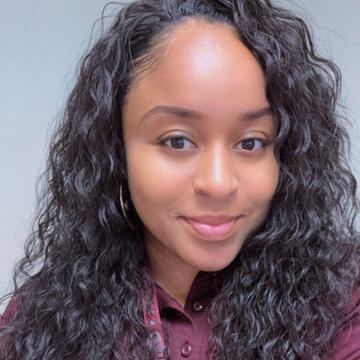
“What I appreciate most about NCCU’s Family and Consumer Sciences program is the genuine support from faculty and the way every lesson connects to real life. This experience has shaped me into a stronger educator and leader, grounded in purpose and heart.”
Carol Mabiala
“My favorite class taught me to study people who look like me, and my professors didn’t just notice my grades...they noticed me. That kind of recognition and support gave me the confidence to lead, to serve, and to be the change I believe in.”

Check Out Similar Programs Offered by NCCU
Graduate students in Family and Consumer Sciences (FCS) often find strong connections with NCCU’s Master of Education, Master of Science in Higher Education Administration, Master of Social Work, and Master of Public Administration programs. These degrees expand opportunities in family services, education, student success, nonprofit leadership, and public policy, helping FCS graduates build on their skills in community engagement, social advocacy, and educational leadership to create meaningful impact across varied settings.
Program Contacts
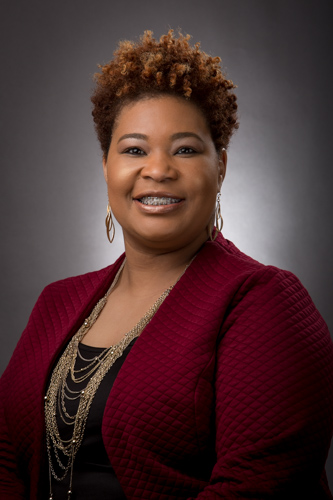
Glass, Wykeshia
Department Chair, Associate Professor
Curriculum and Instruction
 H. M. Michaux, Jr. School of Education Building, Room 2098

 919-530-6669

Mitchell, Charles I
Assistant Professor, Curriculum and Instruction
School of Education
Graduate Admissions Contact
Have questions or want to learn more about the Family and Consumer Sciences graduate program? We are here to help you take the next step in your academic journey.

Love, Lauren
Graduate Admissions Specialist
Graduate Studies
Get a Head Start on Your Future: Apply Today
Advance your career and make an impact with an M.S. in Family and Consumer Sciences. Applications are accepted for both fall and spring terms. Applications are submitted through the online Graduate Admissions Application.