In clinical research, one of the greatest challenges is not discovering new treatments. It is helping people understand treatments.
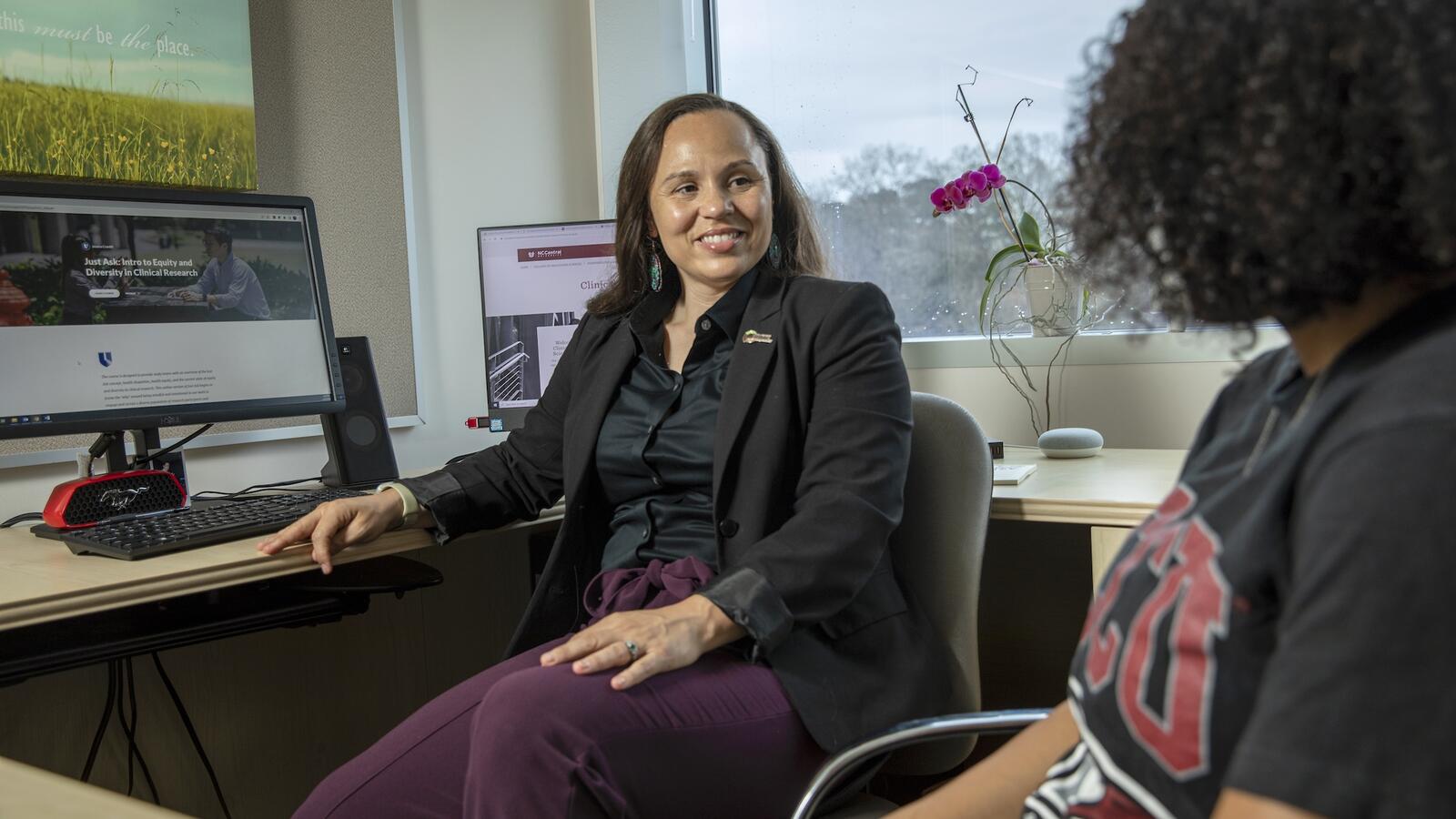
At North Carolina Central University (NCCU), Tracie Locklear, Ph.D., research assistant professor of pharmaceutical sciences and program lead for Clinical Research Sciences, sees this firsthand. Clinical trial consent forms can span 20 to 25 pages and are often written at a level more suited for researchers than patients. Yet informed consent is critical.
“We want participants to truly understand what they’re agreeing to,” Locklear said. “What the risks are. What the potential benefits are. And what the research is trying to accomplish.”
To address this gap, Locklear partnered with Weifan Zheng, Ph.D., professor of pharmaceutical sciences, to develop an AI-supported training tool designed to help future clinical professionals communicate more clearly and confidently.
The system is built to read official clinical trial documents, including consent forms and federal research guidelines. It then allows users to ask questions about the study and receive explanations grounded in those approved materials.
In practice, that means a student or professional could ask the system to explain a specific risk, procedure or medical term in plain language before discussing it with a participant.
Beyond improving clarity, the tool functions as a simulation platform. Students can practice explaining trial details to a virtual participant or experience the process from the participant’s perspective. The goal is to build both knowledge and empathy before entering a clinical setting.
“This gives our students the opportunity to level up,” Locklear says. “They can engage with real-world scenarios before ever stepping into a clinic.”
For Zheng, preparing students to use emerging technology responsibly is just as important. “In the AI era, it’s critical that our students are fluent with these tools,” he says. “We are making strides to ensure they are equipped with the knowledge and resources to lead.”