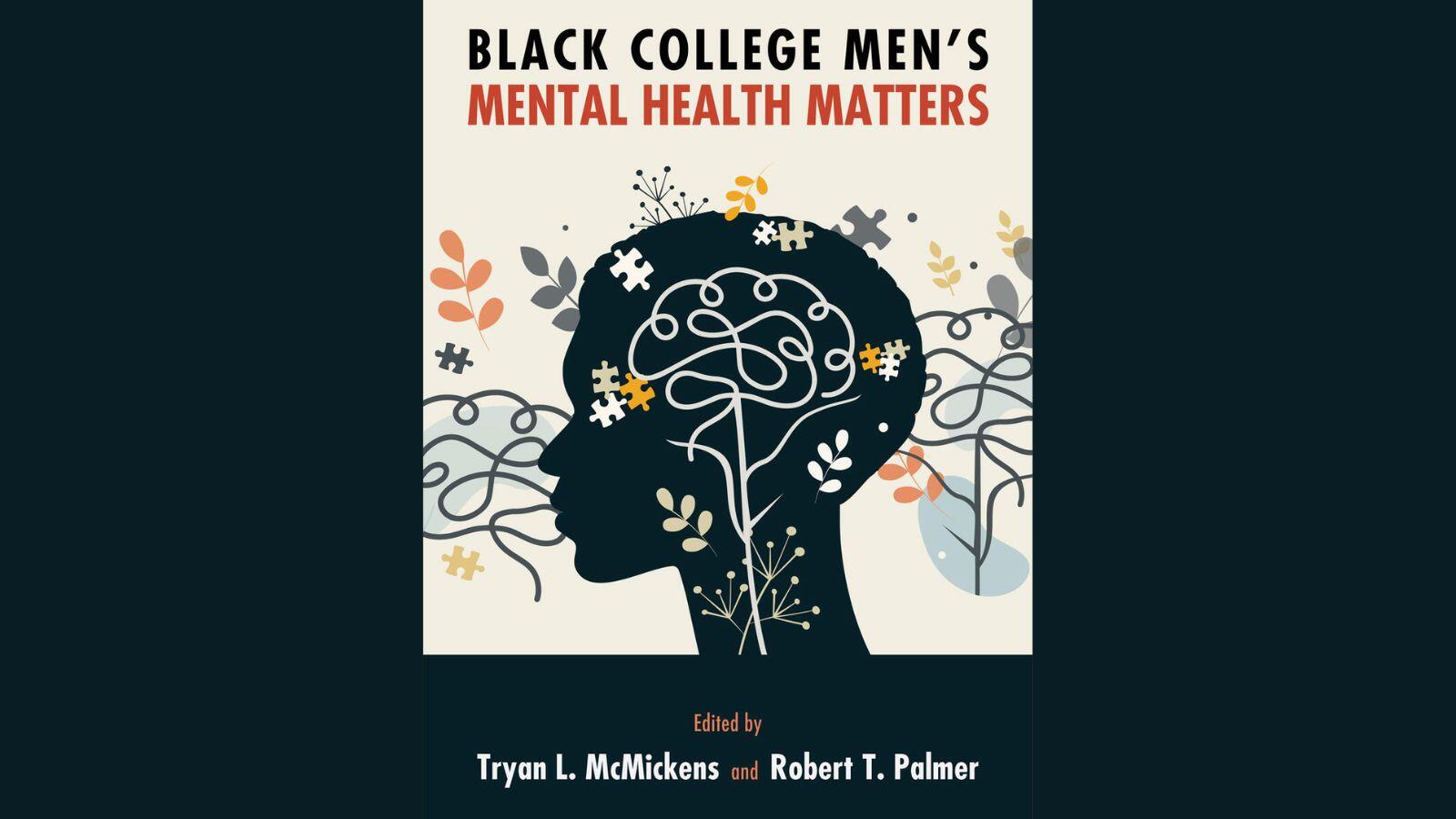
While all college students may experience mental health challenges, Black students sometimes see a higher incidence, particularly of anxiety and stress.
Mental health challenges can be even worse for Black college men.
“Black men are four times as likely to die by suicide than Black women, according to the Centers for Disease Control and Prevention,” said Tryan McMickens, Ed.D., interim associate dean at the School of Education and professor of higher education at North Carolina Central University (NCCU).
McMickens co-edited and co-authored “Black College Men’s Mental Health Matters,” which was published in August by State University of New York (SUNY) Press. Along with Robert T. Palmer, chair of the department of educational leadership and policy studies and a professor of higher education at Howard University, McMickens brought together scholarship from higher education faculty, administrators, counselors, psychologists, psychiatrists and social workers.
One essay by a psychologist addresses racial battle fatigue, defined as chronic exposure to racism and micro-aggressions.
“It’s important for clinicians as well as scholars to be culturally competent,” said McMickens. “Without having an understanding of these types of oppression, a counselor might misdiagnose or not understand the full extent of the challenge.”
Other topics include promoting mental health and wellness on college campuses and using a trauma informed pedagogy in classrooms. They also explored depression and suicide among Black men in college and the mental health narratives of Black men with disabilities using critical disability theory.
For some Black college men, there is reluctance to discussing their mental health.
“Mental health is a highly personal and sensitive topic,” said McMickens.
Black college men interested in seeking assistance might have trouble finding it, according to a counselor’s essay.
“Less than 12% of counselors self-identify as Black,” said McMickens. “If a Black male student seeks support from a Black identified counselor, it may be challenging for them to find one.”
The book concludes with a chapter of resources. Those include the “Pivot” podcast, “All Black Men Need Therapy” podcast, Black Mental Health Alliance, Melanin and Mental Health and Call Blackline.
“Black College Men’s Mental Health Matters” was three years in development and is part of the SUNY series of books on critical race studies in education.