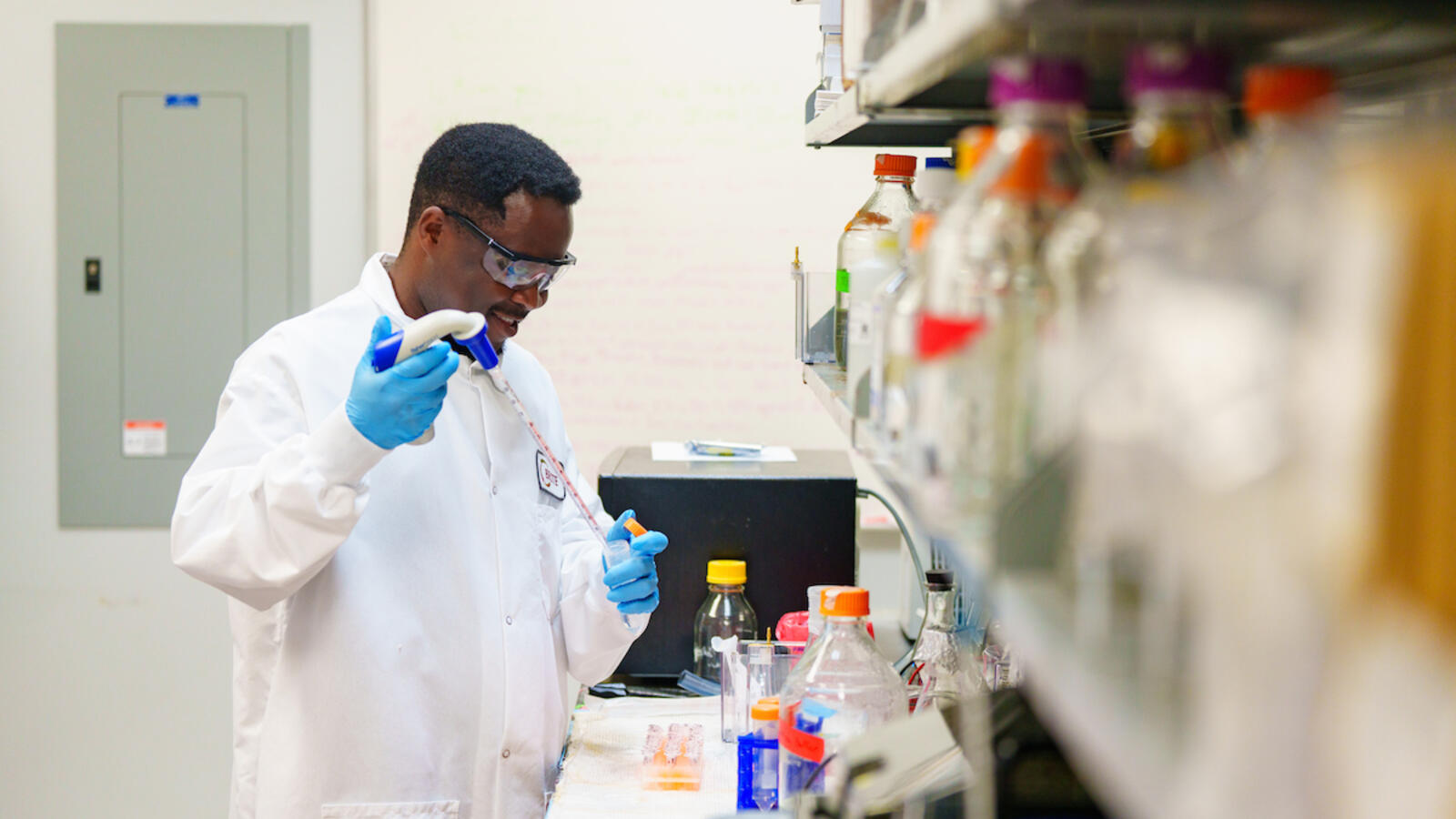
North Carolina Central University (NCCU) has experienced a 23.68% increase in grants for sponsored research this year.
In fiscal 2026, NCCU received $47 million, an increase from fiscal 2025 when the university received $38.1 million.
The growth marks progress toward NCCU’s goal of achieving Carnegie Research 2 status, a priority in the university’s Soaring to New Heights: Vision 2030 strategic plan.
Kuldeep Rawat, Ph.D., vice chancellor of transformative partnerships and economic development, suggests several reasons for the increase.
First, “the expertise and competitiveness of our faculty,” Rawat said. “Our researchers are increasingly well positioned to pursue opportunities that align with national priorities and address real-world challenges.”
Second, “faculty have been very strategic in identifying funding opportunities that effectively leverages the established research strengths such as BRITE, BBRI and other university research programs, despite federal funding cuts.”
“The quality of the proposal is important,” said Rawat. “Targeting the right funding agency is important. Targeting the right grant programs.”
He added that faculty at NCCU frequently work across disciplines and even collaborate with faculty at other institutions to apply for research grants.
Granted this year
Among the largest grants is one for $3,352,501 for RCMI (Research Centers in Minority Institutions), whose contact principal investigator is Deepak Kumar, Ph.D., professor of pharmaceutical sciences.
The grant has multiple aims. Those include a research capacity core, which allows investigators to have resources such as instruments and equipment along with data analysis; investigator development core that funds early-stageinvestigators with pilot funding and provides professional development and a community engagement core that supports investigators in community engaged research.
The grant also funds research on digital health and wellness by Cherise Harrington, Ph.D., associate professor of public health education, and on inflammatory breast cancer by Kevin Williams, Ph.D., director of the Biomanufacturing Research Institute and Technology Enterprise and the Julius L. Chambers Biomedical/Biotechnology Research Institute.
The grant will also be used to:
- Build or strengthen relationships with community-based organizations to distribute and implement research findings.
- Establish relationships with neighboring research institutions, other NIH (National Institutes of Health)-funded programs and RCMI coordinating centers to advance health disparities research at NCCU.
Kumar is also principal investigator of a $10 million sub grant from Duke University for use in translational science.
Translational Science is the study of converting medical research into better health outcomes. This involves identifying barriers toward successfully implementing research and finding solutions. Part of the goal is to accelerate the process from scientific discovery to improving health.