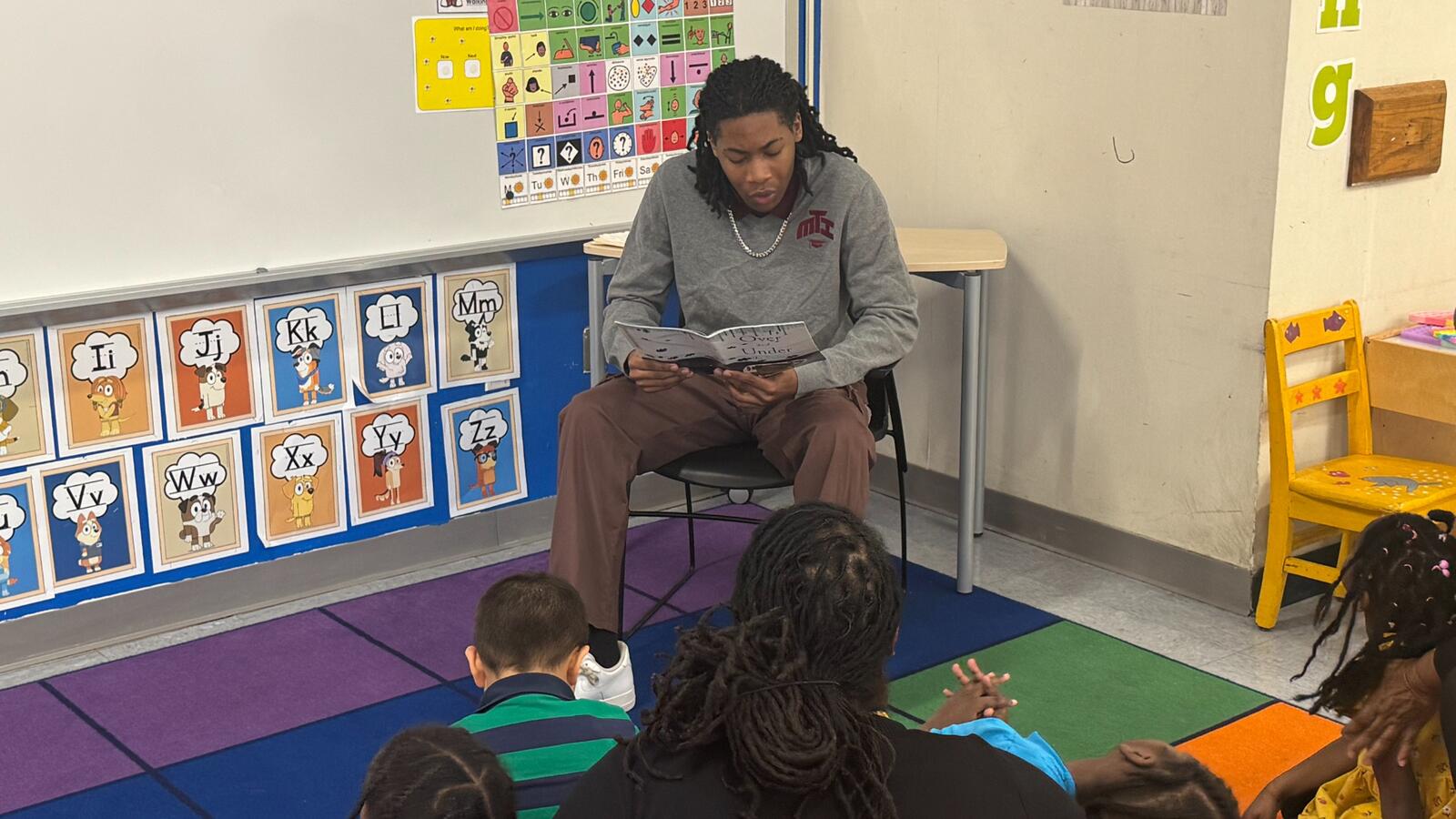
The undergraduate Elementary Education program at North Carolina Central University has earned an A+ from the National Council on Teacher Quality (NCTQ) for how well it prepares future teachers to teach reading to elementary students.
• Bachelor of Arts in Elementary Education with Certification: A+ (View NCTQ grade page)
The report, Teacher Prep Review: Decoding Progress in Reading Preparation, published June 9, 2026, spotlights North Carolina Central University for meeting the standards set by literacy experts for coverage of the most effective methods of reading instruction. Specifically, the program prepares aspiring teachers in all five components of scientifically based reading instruction, including phonemic awareness, phonics, fluency, comprehension and vocabulary, and avoids instructional practices that research has shown to be ineffective or counterproductive for teaching children to read.
A child’s ability to read proficiently in the early grades shapes everything that comes next in school and in life. In the 2024 National Assessment of Educational Progress, 42% of North Carolina fourth-grade public school students performed below NAEP Basic in reading. Teacher preparation is one of the most direct levers available to change that, but only if it is aligned to research-based instructional methods proven to help most students become successful readers.
North Carolina Central University is part of a growing group of teacher preparation programs nationwide helping transform how future teachers are trained to teach reading.
“What we are seeing today is a greater emphasis on making that knowledge even more explicit in our coursework and classroom practices, ensuring that future teachers not only understand the science behind reading development but can apply that knowledge to make informed instructional and assessment decisions,” said Yolanda L. Dunston, Ph.D., professor of Curriculum and Instruction with a focus on literacy education.
“Across the country, many teacher preparation programs still do not fully align with the science of reading, but North Carolina Central University is demonstrating what strong preparation can look like,” said NCTQ President Heather Peske.
“The faculty who teach these courses have put extra effort into course design and enhancements that build on the latest research in literacy instruction, including the science of reading,” said Jeffrey M. Warren, Ph.D., interim dean of the School of Education.
See NCTQ’s Teacher Prep Review: Decoding Progress in Reading Preparation for more information about North Carolina Central University’s coverage of the science of reading and to see how the program compares with others in North Carolina and across the country.