A conversation between a research professor and drug development scientist and a business law professor in 2020 turned into something much bigger: a shared mission to transform how underrepresented communities access, understand and participate in clinical research.
In 2021, that conversation became iSimcha Health LLC, a Durham-based startup co-founded by Brenda Jamerson, PharmD, NBC-HWC, CEO of iSimcha Health and Barry Shuster, JD, MBA, MS-Bioethics, clinical associate professor at North Carolina Central University’s (NCCU) School of Business. Shuster is a co-founder of iSimcha Health and serves as a co-investigator on the company’s research. He provides legal counsel, marketing strategy and business development support.
With early-stage funding from a small business National Institutes of Health grant along with state support, the company is working to make health research information understandable and clinical trials more representative and accessible through artificial intelligence and plain-language tools.
“We want to break down the barriers that have kept too many people in the dark when it comes to medical innovation,” said Shuster. “Our goal is to improve demographic diversity in research and ensure people understand both the risks and potential benefits.”
Finding Joy in the Work
The name iSimcha is rooted in the Hebrew word 'simcha,' meaning joy. For Jamerson, who has studied Hebrew through her Christian faith and Messianic Judaism, the name reflected a goal to infuse every aspect of life with joy. Shuster, who is Jewish, agreed with her suggestion. For both founders, it represents the mindset that health research should not be intimidating; it should be enlightening, even joyful.
For Jamerson, the company was founded based on her goals to provide tools for people to manage their own healthcare journey. AI and large language models accelerated the ability to scale iSimcha Health tools. The dire need for patient empowered education was further confirmed when a friend battling late-stage prostate cancer asked her about clinical trial options because he had never been informed about clinical trial options by his medical team, despite his long illness. By the time she intervened and he was referred, it was too late; he no longer qualified due to complications.
“People need to know about their options for clinical trials sooner,” she said. “Even if they decide not to participate, they deserve the information to make an empowered choice.”
Shuster is a lawyer-bioethicist and former chief marketing officer at Divers Alert Network Inc., an international diving and hyperbaric medical organization, then affiliated with Duke University Health System.
“As someone who now teaches business ethics and policy and has participated in and published applied research, I am interested in how innovation is translated into something that actually serves people,” he said.
A Platform with Purpose
Together, Jamerson and Shuster, along with the IT expertise of fellow co-founders and iSimcha Health Chief Technology Officer David Randall, developed two major tools. Research LinQ™ is a clinical trial finder that leverages the power of AI to pull from every registered study in the U.S., rewriting details into plain language that users can understand, browse, save and share. The tool allows patients to also connect with the research investigators as well as ask questions about the study. Patient advocacy organizations, research sites, universities and life science organizations can customize the trial finder to host the studies done at their institution; thereby scaling the ability for widespread use of their AI enabled technology.
ScienceMyHealth™ translates peer-reviewed research articles and FDA announcements into simple, engaging formats, including videos hosted on the ScienceMyHealth™ website and YouTube channel, to help users stay informed about medical breakthroughs.
“For Science My Health, we use AI to turn complex, peer‑reviewed medical research written at a graduate level into clear, high‑school–level summaries and videos so anyone can have access to and understand the same information doctors read,” said Jamerson.
Healing Trust and Building Access
Beyond technology, iSimcha is about rebuilding trust. Jamerson and Shuster know that for many communities, especially Black and Brown populations, historical abuse, like the Tuskegee Syphilis Study, has left scars.
“We have to meet people with honesty and empathy,” said Shuster. “And we have to give them ongoing access to information, not just show up when researchers need participants.”
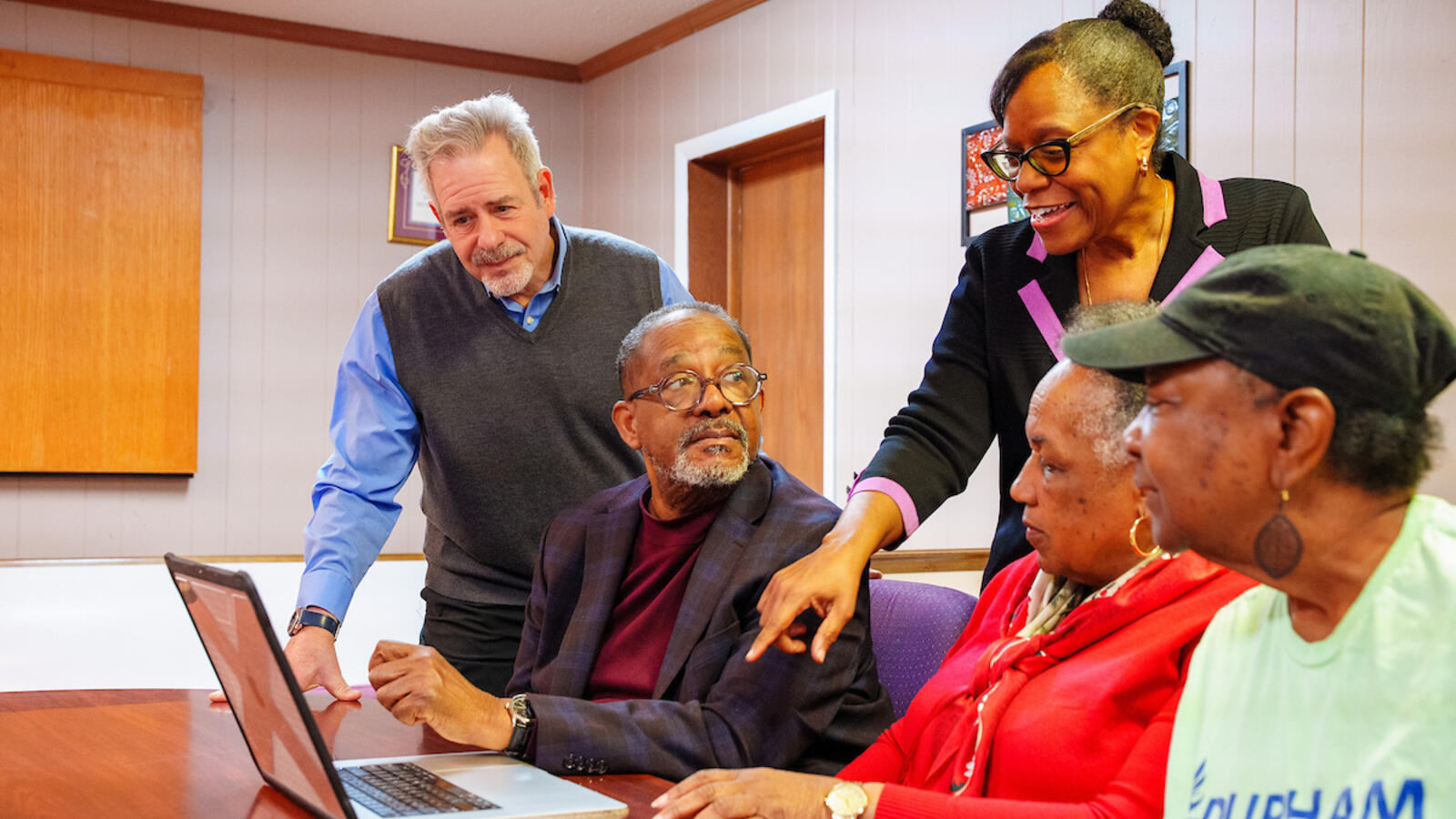
To ensure the platform reflected real needs, Jamerson along with iSimcha consultant Deirdre Guion Peoples, Ph.D., a former NCCU professor, and iSimcha software developer William DeCicco conducted software design thinking sessions. The sessions involved African American, Asian and Latin seniors at Holy Cross Catholic Church, Durham Center for Senior Life and Antioch Builds Community in Durham. Their input directly influenced platform design.
From Campus to Community
Both founders credit NCCU as a key part of their journey. They were awarded two NCCU Innovation Grants totaling $50,000, receiving $25,000 each to support early-stage research validating the impact of plain-language informed consent on clinical trial participation.
“The NCCU funding was key in helping us research, validate and publish that plain language clinical trial information truly affects willingness to participate in trials,” said Jamerson.
The company has also partnered nationally with The Cobb Institute, the educational arm of the National Medical Association, helping advocacy groups launch their own branded trial finders using iSimcha Health’s platform. The Cobb Institute is a Washington, D.C.-based national consortium of scholars that engages in innovative research and knowledge dissemination for the reduction and elimination of racial and ethnic health disparities and racism in medicine.
Looking Ahead
iSimcha Health is in growth mode. The co-founders are focused on expanding partnerships with academic researchers, health advocacy organizations and patient communities nationwide.
“We want iSimcha Health to become the go-to trusted resource for engaging patients for health research access, education and clinical research,” said Jamerson.”
“As a proud NCCU law school alumnus and business school professor, I hope my contributions to iSimcha Health will be cited as another example of the university’s long history of positive societal impact, said Shuster.